
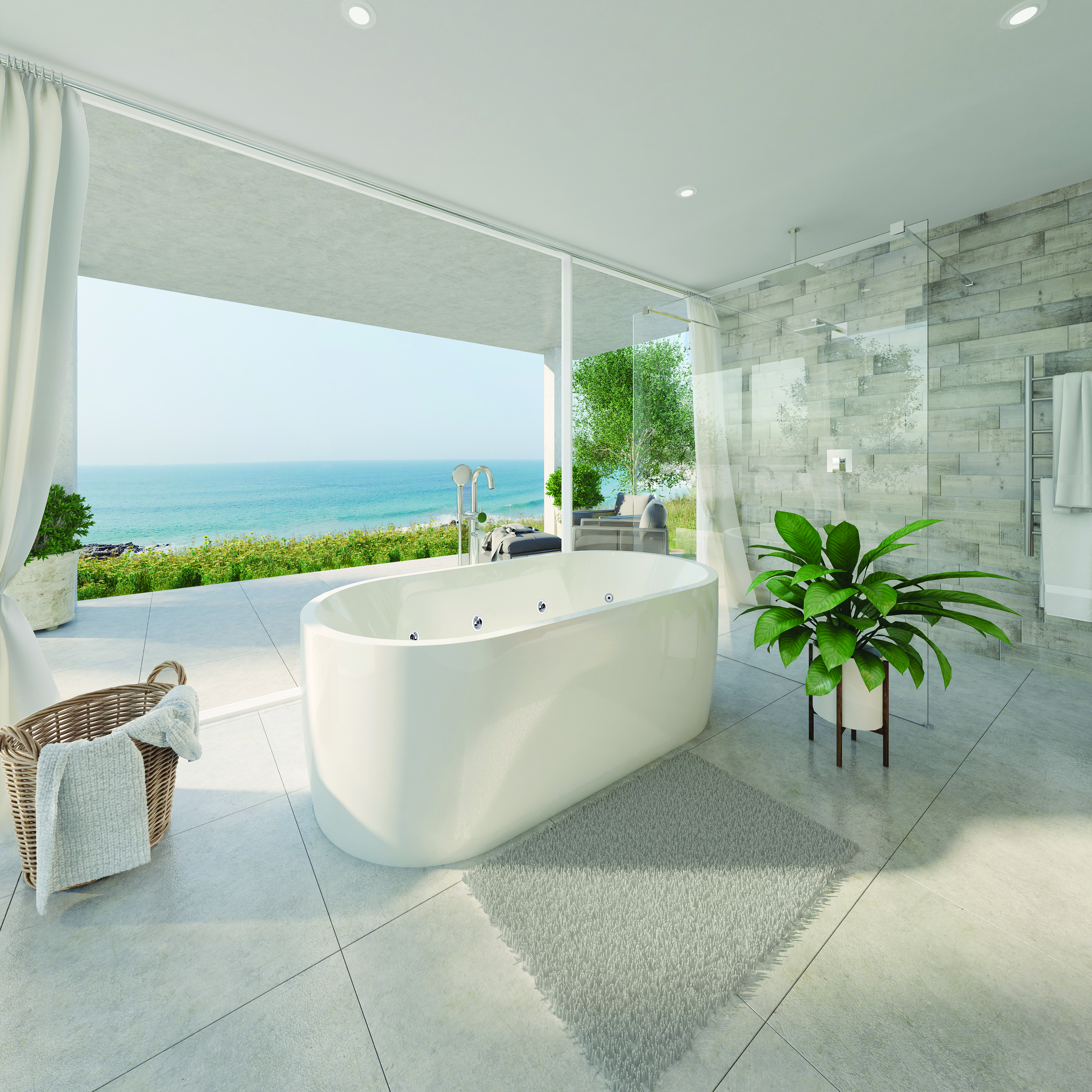
Acrylic Vs Solid Surface Vs Stone: Which Freestanding Bath Material Is Right For You?
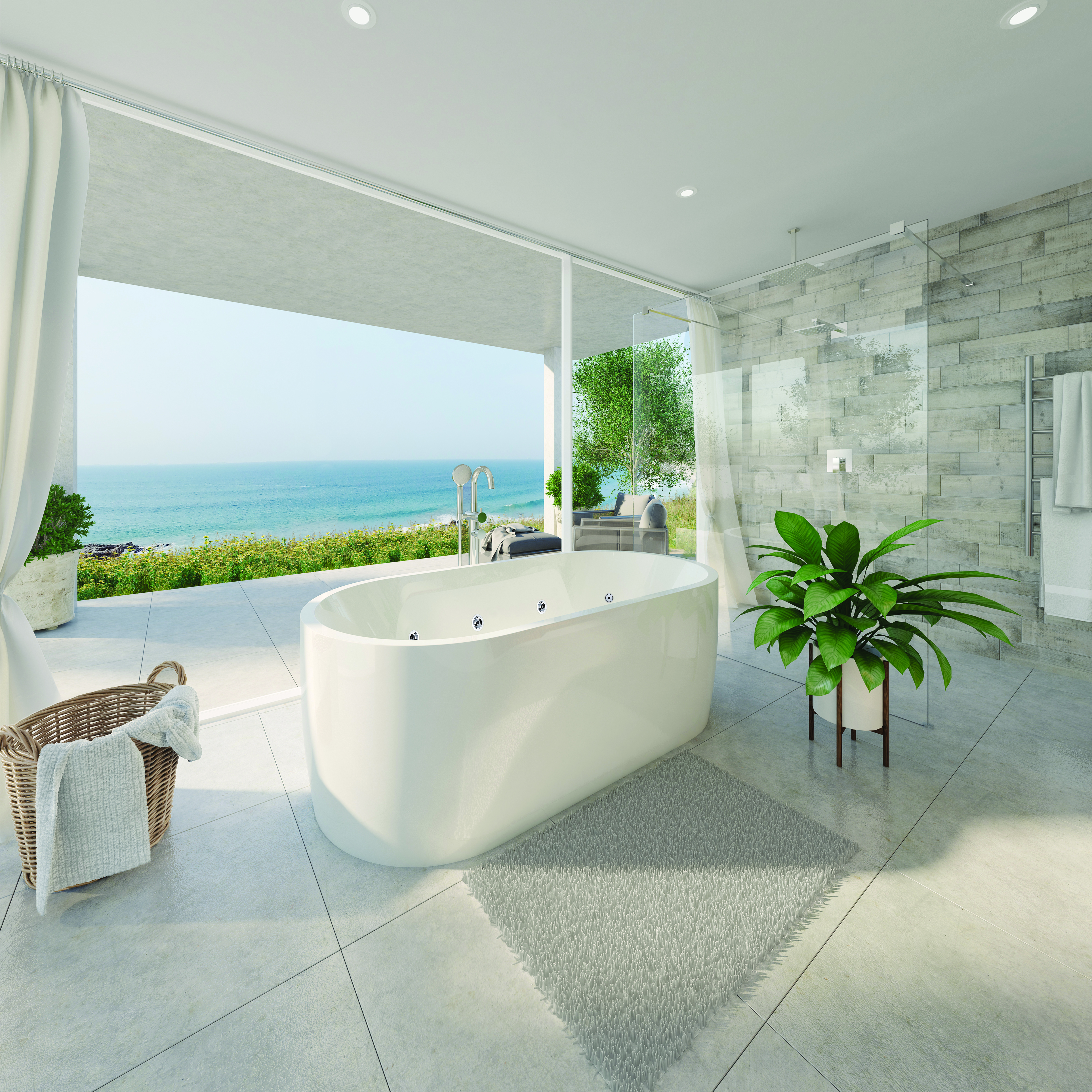
Freestanding baths tend to look similar in photos — all sculptural, sitting apart from the wall and promising the same soak-in-style moment. What actually differs is the material underneath. That difference shows up in weight, how well the bath holds heat, how it feels to touch and what it costs.
Working through the three main freestanding bath materials — acrylic, solid surface and stone — makes it much easier to choose a freestanding bath that suits your bathroom and your budget.
Choosing the right freestanding bath material
Acrylic, solid surface and stone each strike a different balance between weight, warmth retention, durability and price. None of them is universally better, since the right choice depends on your bathroom's structure, your budget and how the bath actually gets used.
Acrylic: lightweight and the most budget-friendly
Acrylic is the most common freestanding bath material, largely because it's light enough to install without special structural consideration in most homes. It retains heat reasonably well for the duration of a normal bath. Its smooth, glossy surface also comes in a wide range of shapes, which makes acrylic a practical entry point into freestanding baths.
It's generally the most affordable of the three materials, but the trade-off is durability. Acrylic can scratch more easily than solid surfaces or stone, though minor scuffs can often be buffed out. It's also more prone to flexing slightly underfoot compared to heavier materials.
Because acrylic is lightweight, installation is usually straightforward. In most cases, the floor won't need to be checked for load capacity, which can keep both cost and disruption down during a renovation. Day-to-day cleaning is simple with a soft cloth and non-abrasive bathroom cleaner. Avoid harsh chemicals and abrasive scrubbing pads, as these can dull the glossy finish or make existing scratches more visible over time.
Solid surface: a heavier and more premium feel
Solid surface baths typically use a composite blend of materials rather than pure acrylic. They sit between acrylic and stone in weight, price and performance. The material holds heat better than acrylic, keeping bath water warmer for longer. Its smooth, matte surface also creates a more stone-like finish with no visible seams.
Solid surface is heavier than acrylic, so check that the bath will work with your bathroom's floor structure. However, it's generally more manageable to install than natural stone.
The material also resists staining well. Its consistent composition means light scratches or marks can often be sanded out by a professional rather than requiring the bath to be replaced. For regular cleaning, a mild detergent and soft cloth are usually enough. Check the manufacturer's guidance before using abrasive products, as some solid surface finishes can be sensitive to certain chemicals.
Stone or stone composite: maximum durability and heat retention
Stone and stone composite baths sit at the premium end of freestanding bath materials. Their density provides excellent heat retention, helping bath water stay warmer for longer than acrylic or solid surfaces. They also offer strong resistance to everyday wear. Natural stone can feature subtle variations from bath to bath, which appeals to homeowners looking for a more individual finish.
Stone is by far the heaviest of the three materials. Before committing to a stone freestanding bath, have a builder or plumber confirm that the bathroom floor can support the load. This is important in upper-storey bathrooms and older homes.
That density contributes to stone's durability, but the surface requires more care when cleaning. Abrasive cleaners and scouring pads can dull or etch the finish over time, so use a pH-neutral cleaner and soft cloth instead. Chips and cracks can also be more involved and costly to repair than damage to acrylic or solid surfaces.
Freestanding bath materials at a glance
Acrylic is the easiest option to install and the lightest on the budget; solid surface offers a middle ground with better heat retention and a more premium finish; and stone delivers the best durability and warmth retention at the highest weight and price.
|
Material |
Weight |
Heat retention |
Durability |
Price range |
|
Acrylic |
Light |
Moderate |
Can scratch, easy to buff out |
Lower |
|
Solid surface |
Medium |
Good |
Durable, no visible seam |
Mid to higher |
|
Stone/stone composite |
Heavy |
Excellent |
Very durable, natural variation |
Highest |
Discover the right freestanding bath at Tradelink
A freestanding bath is a big-ticket item, and material, especially, is hard to judge from a screen. Tradelink's freestanding baths range spans acrylic, solid surface and stone, so you can compare the weight, finish and feel of each before deciding.
Your nearest Tradelink store can also talk through floor loading and installation for your specific bathroom, particularly useful if you're leaning towards stone. Current promotions are worth a look before you buy, and the FAQs cover common questions if anything's still unclear.