
Tips For Choosing The Perfect Bathroom Vanity (Sizes, Styles & Materials Explained)
A bathroom vanity has to do more work than almost anything else in the room. It's a fixed piece of furniture, a storage solution and a design feature all at once. Unlike tapware or a mirror, a vanity is expensive and disruptive to change once it's installed, which is why knowing how to choose a bathroom vanity properly matters more here than with most other bathroom fixtures.
Why the perfect bathroom vanity matters
The vanity is usually the first thing anyone notices walking into a bathroom, but it's also the piece doing the most practical work in the room. It's where the day actually starts and ends for most people, holding everything from toothbrushes to skincare to towels. A vanity that's the wrong size or configuration doesn't just look off. It creates a daily friction point in a room that's meant to be simple to use.
Tips for choosing the perfect bathroom vanity
Size, style and material are the three factors that actually determine whether a vanity works for your bathroom, and tackling them in that order makes the decision easier. Size rules out what will physically fit, while style narrows things down to how the space gets used. Material comes last, once the shape and configuration are already settled.
Measure your space before anything else
Before considering finishes or styles, measure the available width, depth and height in the space where the vanity will go. Standard vanity widths in Australia typically run in increments such as 600mm, 750mm, 900mm and 1200mm, so knowing your available width narrows the options considerably before you start browsing.
A few things are easy to overlook at this stage:
- Door and drawer clearance, since a vanity that fits the wall width can still block a door or drawer from opening fully
- The position of existing plumbing rough-in, which affects whether you can install a vanity of a different width or configuration without moving pipework
- Ceiling height and any sloped walls in smaller bathrooms or ensuites, which can affect tall or floor-standing units
Getting this measurement right first avoids falling for a vanity style online that simply won't fit once it's in the room.
Choose a style that suits how the bathroom functions
Once you know what size range you're working with, the next decision is how the vanity should function day to day. Wall-hung vanities sit off the floor, freeing up visible floor space and making cleaning underneath easier. They also tend to suit smaller bathrooms or ensuites. Floor-standing vanities offer more internal storage volume, which can be a practical choice for family bathrooms or anyone storing more than daily essentials.
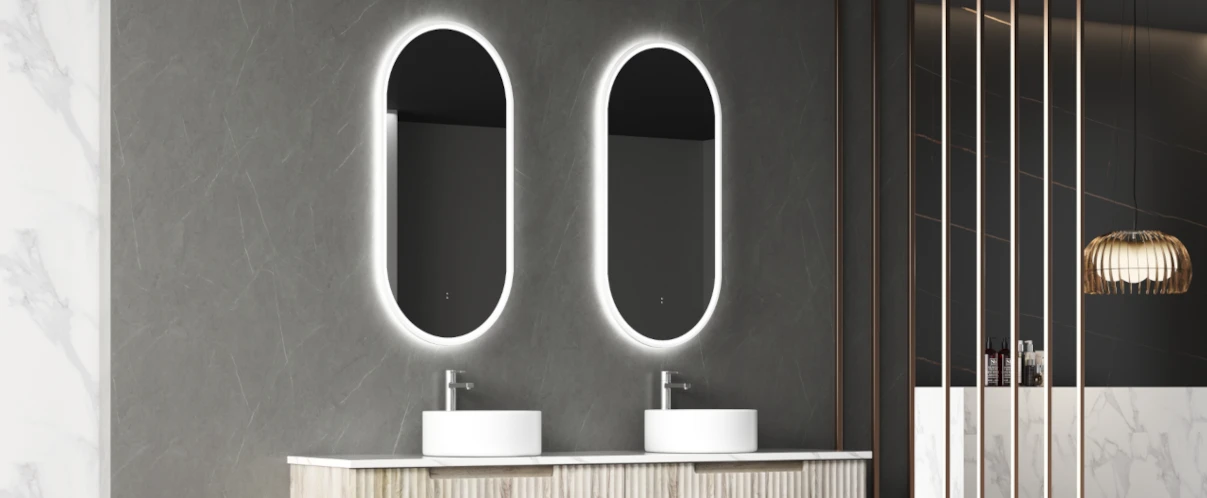
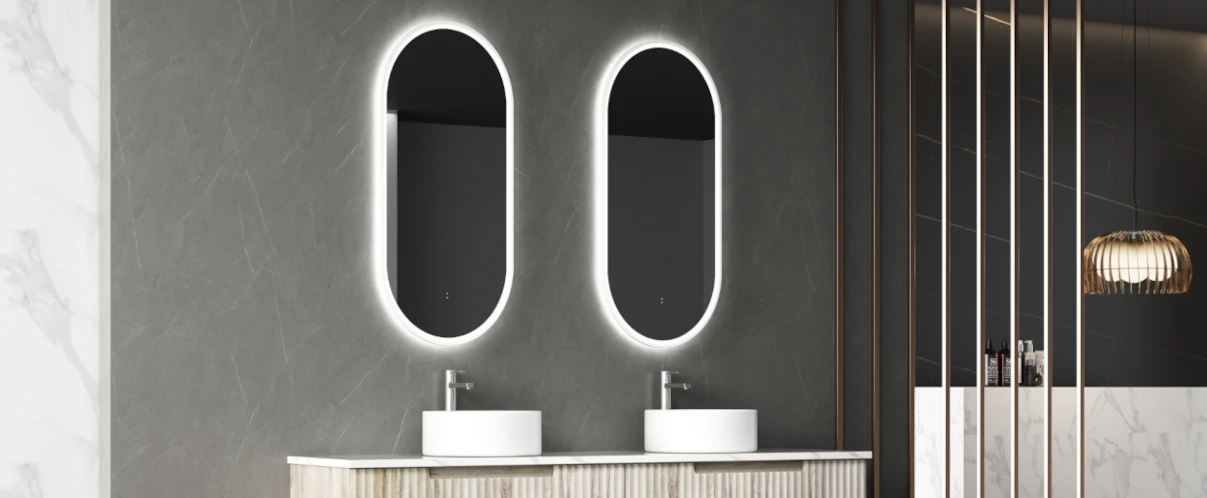
Another tip for choosing the perfect bathroom vanity is to think through storage configuration, not just the outer shape. A single basin works for most bathrooms, while a double basin suits a space shared by two people getting ready at once. Drawers suit smaller, frequently used items, while cupboards handle bulkier storage like towels.
Pick a material that can handle a wet environment
A bathroom vanity has to cope with humidity, splashing and regular cleaning, so material choice affects how well it holds up over time as much as how it looks.
- Laminate is a budget-friendly option that resists moisture reasonably well and comes in a wide range of colours and finishes, though it can show wear at edges and joins over time with heavy daily use.
- Polyurethane offers a smoother and more premium painted finish with no visible joins. It holds up well in wet environments but is typically at a higher price point than laminate.
- Timber veneer brings warmth and a natural look to a bathroom. However, it needs a quality sealed finish to perform well in a consistently humid space, since timber is more vulnerable to moisture than synthetic finishes.
- Stone or engineered stone benchtops, often paired with a laminate or polyurethane cabinet base, offer strong durability and a premium look for the visible top surface. It also comes at a higher cost than laminate and with extra weight to account for during installation.
The right material often comes down to balancing how much moisture exposure the space gets, how the vanity needs to coordinate with tiles and tapware, and what the budget allows.
Shop at Tradelink for perfect bathroom vanity
A vanity that ticks the right boxes on paper is still worth seeing in person, especially for finishes like timber veneer or stone that look different in a real bathroom than in photos. Visit your nearest Tradelink store to compare finishes side by side, or browse the full vanity range online if you already know what you're after. Check current promotions before you buy.
Still working out how to choose a bathroom vanity? Browse FAQs for sizing, installation and rough-in requirements.